Understanding Different Types of Contract Frameworks: Pros and Cons

In various industries such as construction, oil and gas, and pharmaceuticals, selecting the appropriate contract framework is crucial for the success of a project. Each contract type has its own set of advantages and disadvantages, influencing project costs, risk management, and overall execution. This article will explain different contract frameworks, focusing primarily on Fixed Price (Lump Sum), Cost-Reimbursable, EPC, Turnkey, Design-Build, Framework Agreements, and particularly NEC (New Engineering Contract).

1. Fixed Price (Lump Sum) Contract

Overview: A Fixed Price (Lump Sum) contract involves a single, fixed price for the entire project scope, regardless of actual costs incurred.

Pros:

  • Cost Certainty: Provides a clear and predictable budget for the client.
  • Simplicity: Easy to understand and manage.
  • Contractor Incentive: Encourages efficiency, as the contractor benefits from completing the project under budget.

Cons:

  • Limited Flexibility: Any changes in scope can be costly and time-consuming to implement.
  • Quality Risk: The contractor may cut corners to maximize profit.
  • Risk for Contractor: The contractor bears the risk of cost overruns, which can lead to disputes.

2. Cost-Reimbursable (Cost-Plus) Contract

Overview: In a Cost-Reimbursable contract, the contractor is reimbursed for all legitimate project costs plus an additional fee or percentage as profit.

Pros:

  • Flexibility: Easily accommodates changes in project scope.
  • Transparency: Provides detailed cost breakdowns and reimbursements.
  • Encourages Innovation: Contractors can propose innovative solutions without financial risk.

Cons:

  • Cost Overruns: Higher risk of exceeding budget as costs are not capped.
  • Administrative Burden: Requires detailed tracking and auditing of expenses.
  • Less Incentive for Efficiency: Contractors may have less motivation to control costs.

3. EPC (Engineering, Procurement, and Construction) Contract

Overview: EPC contracts are prevalent in the oil and gas industry and large-scale infrastructure projects, where the contractor is responsible for the entire project from design and procurement through to construction and commissioning.

Pros:

  • Single Point of Responsibility: Simplifies management for the client.
  • Predictable Costs and Timelines: Lump sum nature provides budget and schedule certainty.
  • Efficiency: Integrated approach can lead to faster project completion.

Cons:

  • Risk for Contractor: High risk transferred to the contractor, which can lead to inflated prices.
  • Less Flexibility: Changes are difficult and expensive to implement once the project is underway.
  • Potential for Overruns: If the scope is not well-defined, there can be significant cost and time overruns.

4. Lump Sum Turnkey Contract

Overview: Lump Sum Turnkey contracts are commonly used in the pharmaceutical industry for projects requiring a complete, operational facility delivered by the contractor.

Pros:

  • Fixed Price: Provides cost certainty for the client.
  • Single Point of Responsibility: Simplifies coordination and management.
  • Speed: Often leads to faster project delivery as the contractor controls the entire process.

Cons:

  • Risk for Contractor: High risk of cost overruns and delays falls on the contractor.
  • Quality Concerns: Risk of reduced quality if the contractor cuts costs.
  • Limited Client Control: Client has less influence over design and construction details.

5. Design-Build Contract

Overview: A Design-Build contract combines design and construction responsibilities into a single contract, fostering efficiency and innovation.

Pros:

  • Integrated Approach: Promotes coordination between design and construction, reducing delays and conflicts.
  • Speed: Can lead to faster project completion as design and construction phases overlap.
  • Cost Savings: Potential for cost savings through innovative solutions and efficient processes.

Cons:

  • Less Client Control: The client has less influence over the design process.
  • Potential for Conflicts: If not managed well, the dual roles can lead to conflicts of interest.
  • Quality Concerns: Focus on efficiency may sometimes compromise quality.

6. Framework Agreement

Overview: A Framework Agreement is an overarching contract that sets terms for future individual contracts within a specified period, often used for ongoing services or supplies.

Pros:

  • Flexibility: Allows for multiple projects or services under a single agreement.
  • Efficiency: Reduces the need for repeated tendering processes.
  • Consistency: Ensures consistent terms and conditions across multiple projects.

Cons:

  • Complexity: Can be complex to manage and administer.
  • Potential for Complacency: Long-term relationships may lead to reduced performance over time.
  • Less Competitive Pressure: May reduce competitive pressure as the same contractors are repeatedly used.

7. NEC (New Engineering Contract)

Overview: NEC contracts are designed to promote collaboration and proactive management, with various options such as lump sum, target cost, and bill of quantities. They are widely used in the construction industry and increasingly in other sectors.

Pros:

  • Enhanced Collaboration: Emphasizes teamwork and proactive problem-solving.
  • Flexibility: Various options (A, B, C, D) allow for tailored approaches to pricing and risk management.
  • Proactive Risk Management: Mechanisms like early warning systems and risk registers help manage risks effectively.
  • Transparency: Promotes clear communication and transparency between parties.

Cons:

  • Administrative Complexity: Requires more detailed administration and management.
  • Learning Curve: Project teams unfamiliar with NEC may face a learning curve.
  • Potential for Disputes: Detailed processes and procedures can sometimes lead to disagreements if not properly managed.

Selecting the appropriate contract framework depends on the specific requirements, risks, and objectives of the project and industry. Fixed Price contracts offer cost certainty but less flexibility. Cost-Reimbursable contracts provide flexibility but can lead to cost overruns. EPC and Lump Sum Turnkey contracts offer integrated project delivery with predictability, but transfer significant risk to the contractor. Design-Build contracts foster innovation and speed but may reduce client control. Framework Agreements streamline processes but can be complex to manage. NEC contracts, with their emphasis on collaboration and flexibility, are suitable for various project types, including large infrastructure projects.

Understanding the pros and cons of each contract type enables better decision-making and project outcomes, ensuring that the chosen framework aligns with the project’s goals and challenges.
Earned Value Management Method

Overview of Earned Value Management

Earned Value Management (EVM) is a comprehensive project management technique used to assess project performance and progress. EVM integrates data regarding actual costs incurred, planned costs, and the monetary value of completed work to evaluate the project’s current status in terms of budget and schedule. Additionally, EVM enables the estimation of future project performance and outcomes.

Calculating Earned Value Management

The foundation of EVM is the Work Breakdown Structure (WBS). Each component within the WBS must be individually analyzed, with progress tracked for each work package. Completion rates are assigned as follows:

  • 100% for fully completed tasks
  • 0% for tasks not yet started or partially completed

For partially completed tasks, various methods such as the 50-50 rule, 0-100 percent rule, and critical input use rule can be applied. However, for simplicity, this discussion will assume a binary approach (0% or 100%) for completion rates.

Key Metrics in Earned Value Management

To effectively apply EVM, the following concepts are crucial:

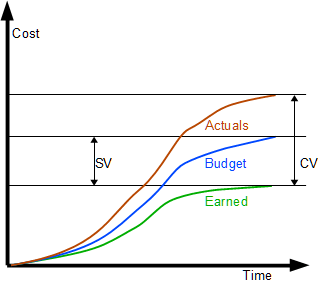
Earned Value (EV): The budgeted amount for the work accomplished to date.

Actual Cost (AC): The actual expenditure for the work performed.

Planned Value (PV): The budgeted cost for the work scheduled to be completed by a specific date.

These metrics should be continuously calculated and plotted to monitor deviations from planned performance and address any discrepancies.

Detailed Analysis of EVM Indices

Cost Variance (CV)

Formula: CV = EV – AC

Interpretation: A negative CV indicates that the project is over budget, meaning actual costs have exceeded planned expenditures.

Schedule Variance (SV)

Formula: SV = EV – PV

Interpretation: A negative SV indicates that the project is behind schedule.

Cost Performance Indicator (CPI)

Formula: CPI = EV / AC

Interpretation: A CPI less than 1 indicates that costs have exceeded the budgeted amount.

Schedule Performance Indicator (SPI)

Formula: SPI = EV / PV

Interpretation: An SPI less than 1 indicates that the project is progressing slower than planned.

Forecasting Future Project Performance

EVM also allows for future performance estimations through the following calculations:

Estimate to Complete (ETC)

Formula: ETC = (BAC – AC) / CPI

Purpose: Determines the remaining budget needed, assuming current performance trends continue.

Estimate at Completion (EAC)

Formula: EAC = AC + ETC

Purpose: Provides an estimate of the total project cost at completion.

To Complete Performance Indicator (TCPI)

Formula: TCPI = (BAC – EV) / (BAC – AC)

Purpose: Indicates the necessary cost performance for the remaining work to meet a specific management goal.

While other indices such as TPI and TV offer additional insights, the accuracy of EVM largely depends on the precise reflection of work completion percentages. Consistent monitoring and adjustment based on EVM metrics enable more effective project management, ensuring projects stay within budget and on schedule.

The Crucial Role of Human Resource Planning in Engineering Projects

Resource planning is the strategic process of identifying, allocating, and managing the resources required to execute a project successfully. These resources encompass not only tangible assets like manpower, materials, and equipment but also intangible elements such as time and expertise. Particularly, human resource planning takes centre stage, ensuring the right people are in the right place at the right time.

Importance of Human Resource Planning

Optimal Resource Allocation: Identifying and assigning skilled personnel appropriately prevents underutilization or overburdening, maximizing productivity.

Risk Mitigation: Anticipating resource gaps or skill shortages enables proactive measures, averting delays and cost overruns.

Enhanced Efficiency: Aligning human resources with project requirements fosters smooth workflow, reducing bottlenecks and enhancing project efficiency.

Improved Team Morale: Clear roles and responsibilities instill confidence and motivation, fostering a positive team environment vital for project success.

Techniques for Effective Human Resource Planning

Skills Assessment: Evaluate existing skill sets within the team and identify areas for development or augmentation to meet project demands.

Forecasting: Analyze historical project data, market trends, and future project requirements to forecast human resource needs accurately.

Succession Planning: Identify key personnel and groom potential successors to mitigate risks associated with talent turnover.

Collaborative Approach: Engage project stakeholders and team members to gather insights and ensure alignment between project goals and resource allocation strategies.

Tips for Successful Human Resource Planning:

Start Early: Initiate resource planning in the project’s infancy to allow sufficient time for thorough assessment and strategic decision-making.

Flexibility: Maintain agility in resource allocation to adapt to evolving project dynamics, market conditions, and unforeseen challenges.

Communication: Foster open channels of communication to ensure transparency and alignment between project managers, team members, and stakeholders.

Training and Development: Invest in continuous learning and development initiatives to equip team members with the necessary skills and knowledge to excel in their roles.

Common Mistakes to Avoid

Underestimating Resource Needs: Failure to accurately assess resource requirements can lead to understaffing, compromising project timelines and quality.

Overlooking Skill Diversification: Relying heavily on a limited pool of expertise increases vulnerability to disruptions caused by personnel availability or skill gaps.

Ignoring Team Dynamics: Neglecting team dynamics and interpersonal relationships can undermine collaboration and morale, impeding project progress.

Mastering human resource planning is paramount for the success of projects. By adopting proactive strategies, leveraging effective techniques, and avoiding common pitfalls, project managers can optimize resource utilization, mitigate risks, and foster a conducive environment for project success.

Project Planning

Title: Mastering Project Planning: A Comprehensive Guide for Success

Introduction: Project planning serves as the cornerstone of efficient project management. It establishes a solid framework for achieving project objectives, managing resources, and meeting stakeholder expectations. In this comprehensive guide, we delve into the essential components of project planning, offering practical insights and strategies for creating a robust project plan that drives success.

Define Clear Project Objectives and Scope:

Start by articulating clear and concise project objectives and scope. What are the specific goals and deliverables of the project? Engage stakeholders to ensure alignment and gather valuable input for shaping project direction.

Establish measurable success criteria to gauge project performance and ensure accountability throughout the project lifecycle.

Craft a Structured Work Breakdown Structure (WBS):

Break down the project into manageable tasks and subtasks using a Work Breakdown Structure (WBS). This systematic approach facilitates better organization and enhances task clarity for team members.

Identify task dependencies and sequence them logically to optimize workflow efficiency and minimize project bottlenecks.

Assign responsibilities and roles to team members, fostering a collaborative environment conducive to project success.

Develop a Dynamic Project Schedule:

Develop a detailed project schedule outlining task timelines, milestones, and dependencies. Leverage project management tools like Gantt charts or intuitive software solutions to visualize and manage project timelines effectively.

Accurately estimate task durations and resource requirements, factoring in potential risks and constraints. Incorporate buffer time and contingency plans to mitigate unforeseen challenges and maintain project momentum.

Optimize Resource Allocation:

Identify and allocate resources judiciously based on project needs, skill sets, and availability. Strive for optimal resource utilization while balancing workload distribution across team members.

Continuously monitor resource allocation and adjust as necessary to address evolving project requirements and mitigate resource constraints.

Embrace resource management best practices to streamline workflows, enhance productivity, and drive project efficiency.

Implement Proactive Risk Management:

Anticipate potential project risks and develop a comprehensive risk management plan to mitigate threats effectively. Prioritize risks based on impact and likelihood, and devise proactive strategies to address them.

Regularly assess and monitor project risks throughout the project lifecycle, employing robust risk monitoring and mitigation techniques to safeguard project outcomes.

Foster a culture of risk awareness and accountability within the project team, empowering members to identify and address risks proactively.

Foster Stakeholder Engagement and Communication:

Cultivate open and transparent communication channels with stakeholders, keeping them informed and engaged throughout the project journey.

Solicit stakeholder feedback and input to ensure alignment with project goals and expectations, fostering a collaborative partnership for project success.

Address stakeholder concerns promptly and transparently, leveraging effective communication strategies to foster trust and mitigate potential conflicts.

Mastering the art of project planning is essential for navigating the complexities of project management and achieving desired outcomes. By adhering to best practices in defining objectives, structuring work breakdowns, developing dynamic schedules, optimizing resource allocation, implementing proactive risk management, and fostering stakeholder engagement, project managers can chart a course for success and deliver exceptional results. Embrace these principles, refine your approach iteratively, and watch as your projects thrive in today’s dynamic business landscape

Change Management in Engineering Project


Change management in engineering projects, whether in the energy sector, oil and gas industry, or pharmaceutical field, refers to the structured process of planning, implementing, and controlling changes to project scope, schedule, budget, and resources. This process is essential for effectively managing the complexities and uncertainties inherent in these industries, where projects often involve high stakes, technical challenges, and stringent regulatory requirements.

In engineering projects within these sectors, change management typically involves the following key components:

Change Identification: Identifying proposed changes to project scope, requirements, or specifications is the first step in the change management process. Changes can originate from various sources, including client requests, technical constraints, regulatory updates, or unforeseen circumstances.

Impact Assessment: Once a change is identified, project teams assess its potential impact on project objectives, including its implications for scope, schedule, budget, quality, and risk. This involves conducting thorough analyses to understand the ramifications of the proposed change and determine the best course of action.

Change Control: Change control processes are established to manage the evaluation, approval, and implementation of changes. This typically involves documenting change requests, reviewing them with relevant stakeholders, assessing their impact, and obtaining formal approval before proceeding with implementation.

Stakeholder Engagement: Engaging stakeholders, including project sponsors, clients, regulatory authorities, and end-users, is crucial throughout the change management process. Stakeholders provide input, feedback, and support, helping to ensure alignment with project objectives and regulatory requirements.

Risk Management: Change management incorporates risk management practices to identify, assess, and mitigate potential risks associated with proposed changes. This involves evaluating the likelihood and impact of risks, developing mitigation strategies, and monitoring risk throughout the change process.

Communication and Training: Effective communication is essential for keeping stakeholders informed about proposed changes, their rationale, and their implications. Training and education programs may also be necessary to equip project teams with the knowledge and skills needed to implement changes successfully.

Documentation and Tracking: Comprehensive documentation is maintained throughout the change management process, including records of change requests, impact assessments, approvals, and implementation plans. Tracking changes ensures transparency, accountability, and traceability of decisions.

Overall, change management in engineering projects is a systematic approach to managing change while minimizing disruption, maximizing benefits, and ensuring compliance with regulatory requirements. It enables organizations to adapt to evolving circumstances, address challenges, and achieve their project objectives effectively.