Earned Value Management Method

Overview of Earned Value Management

Earned Value Management (EVM) is a comprehensive project management technique used to assess project performance and progress. EVM integrates data regarding actual costs incurred, planned costs, and the monetary value of completed work to evaluate the project’s current status in terms of budget and schedule. Additionally, EVM enables the estimation of future project performance and outcomes.

Calculating Earned Value Management

The foundation of EVM is the Work Breakdown Structure (WBS). Each component within the WBS must be individually analyzed, with progress tracked for each work package. Completion rates are assigned as follows:

  • 100% for fully completed tasks
  • 0% for tasks not yet started or partially completed

For partially completed tasks, various methods such as the 50-50 rule, 0-100 percent rule, and critical input use rule can be applied. However, for simplicity, this discussion will assume a binary approach (0% or 100%) for completion rates.

Key Metrics in Earned Value Management

To effectively apply EVM, the following concepts are crucial:

Earned Value (EV): The budgeted amount for the work accomplished to date.

Actual Cost (AC): The actual expenditure for the work performed.

Planned Value (PV): The budgeted cost for the work scheduled to be completed by a specific date.
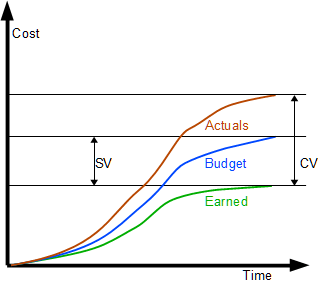
These metrics should be continuously calculated and plotted to monitor deviations from planned performance and address any discrepancies.

Detailed Analysis of EVM Indices

Cost Variance (CV)

Formula: CV = EV – AC

Interpretation: A negative CV indicates that the project is over budget, meaning actual costs have exceeded planned expenditures.

Schedule Variance (SV)

Formula: SV = EV – PV

Interpretation: A negative SV indicates that the project is behind schedule.

Cost Performance Indicator (CPI)

Formula: CPI = EV / AC

Interpretation: A CPI less than 1 indicates that costs have exceeded the budgeted amount.

Schedule Performance Indicator (SPI)

Formula: SPI = EV / PV

Interpretation: An SPI less than 1 indicates that the project is progressing slower than planned.

Forecasting Future Project Performance

EVM also allows for future performance estimations through the following calculations:

Estimate to Complete (ETC)

Formula: ETC = (BAC – AC) / CPI

Purpose: Determines the remaining budget needed, assuming current performance trends continue.

Estimate at Completion (EAC)

Formula: EAC = AC + ETC

Purpose: Provides an estimate of the total project cost at completion.

To Complete Performance Indicator (TCPI)

Formula: TCPI = (BAC – EV) / (BAC – AC)

Purpose: Indicates the necessary cost performance for the remaining work to meet a specific management goal.

While other indices such as TPI and TV offer additional insights, the accuracy of EVM largely depends on the precise reflection of work completion percentages. Consistent monitoring and adjustment based on EVM metrics enable more effective project management, ensuring projects stay within budget and on schedule.


Project Planning

Title: Mastering Project Planning: A Comprehensive Guide for Success

Introduction: Project planning serves as the cornerstone of efficient project management. It establishes a solid framework for achieving project objectives, managing resources, and meeting stakeholder expectations. In this comprehensive guide, we delve into the essential components of project planning, offering practical insights and strategies for creating a robust project plan that drives success.

Define Clear Project Objectives and Scope:

Start by articulating clear and concise project objectives and scope. What are the specific goals and deliverables of the project? Engage stakeholders to ensure alignment and gather valuable input for shaping project direction.

Establish measurable success criteria to gauge project performance and ensure accountability throughout the project lifecycle.

Craft a Structured Work Breakdown Structure (WBS):

Break down the project into manageable tasks and subtasks using a Work Breakdown Structure (WBS). This systematic approach facilitates better organization and enhances task clarity for team members.

Identify task dependencies and sequence them logically to optimize workflow efficiency and minimize project bottlenecks.

Assign responsibilities and roles to team members, fostering a collaborative environment conducive to project success.

Develop a Dynamic Project Schedule:

Develop a detailed project schedule outlining task timelines, milestones, and dependencies. Leverage project management tools like Gantt charts or intuitive software solutions to visualize and manage project timelines effectively.

Accurately estimate task durations and resource requirements, factoring in potential risks and constraints. Incorporate buffer time and contingency plans to mitigate unforeseen challenges and maintain project momentum.

Optimize Resource Allocation:

Identify and allocate resources judiciously based on project needs, skill sets, and availability. Strive for optimal resource utilization while balancing workload distribution across team members.

Continuously monitor resource allocation and adjust as necessary to address evolving project requirements and mitigate resource constraints.

Embrace resource management best practices to streamline workflows, enhance productivity, and drive project efficiency.

Implement Proactive Risk Management:

Anticipate potential project risks and develop a comprehensive risk management plan to mitigate threats effectively. Prioritize risks based on impact and likelihood, and devise proactive strategies to address them.

Regularly assess and monitor project risks throughout the project lifecycle, employing robust risk monitoring and mitigation techniques to safeguard project outcomes.

Foster a culture of risk awareness and accountability within the project team, empowering members to identify and address risks proactively.

Foster Stakeholder Engagement and Communication:

Cultivate open and transparent communication channels with stakeholders, keeping them informed and engaged throughout the project journey.

Solicit stakeholder feedback and input to ensure alignment with project goals and expectations, fostering a collaborative partnership for project success.

Address stakeholder concerns promptly and transparently, leveraging effective communication strategies to foster trust and mitigate potential conflicts.

Mastering the art of project planning is essential for navigating the complexities of project management and achieving desired outcomes. By adhering to best practices in defining objectives, structuring work breakdowns, developing dynamic schedules, optimizing resource allocation, implementing proactive risk management, and fostering stakeholder engagement, project managers can chart a course for success and deliver exceptional results. Embrace these principles, refine your approach iteratively, and watch as your projects thrive in today’s dynamic business landscape

Change Management in Engineering Project


Change management in engineering projects, whether in the energy sector, oil and gas industry, or pharmaceutical field, refers to the structured process of planning, implementing, and controlling changes to project scope, schedule, budget, and resources. This process is essential for effectively managing the complexities and uncertainties inherent in these industries, where projects often involve high stakes, technical challenges, and stringent regulatory requirements.

In engineering projects within these sectors, change management typically involves the following key components:

Change Identification: Identifying proposed changes to project scope, requirements, or specifications is the first step in the change management process. Changes can originate from various sources, including client requests, technical constraints, regulatory updates, or unforeseen circumstances.

Impact Assessment: Once a change is identified, project teams assess its potential impact on project objectives, including its implications for scope, schedule, budget, quality, and risk. This involves conducting thorough analyses to understand the ramifications of the proposed change and determine the best course of action.

Change Control: Change control processes are established to manage the evaluation, approval, and implementation of changes. This typically involves documenting change requests, reviewing them with relevant stakeholders, assessing their impact, and obtaining formal approval before proceeding with implementation.

Stakeholder Engagement: Engaging stakeholders, including project sponsors, clients, regulatory authorities, and end-users, is crucial throughout the change management process. Stakeholders provide input, feedback, and support, helping to ensure alignment with project objectives and regulatory requirements.

Risk Management: Change management incorporates risk management practices to identify, assess, and mitigate potential risks associated with proposed changes. This involves evaluating the likelihood and impact of risks, developing mitigation strategies, and monitoring risk throughout the change process.

Communication and Training: Effective communication is essential for keeping stakeholders informed about proposed changes, their rationale, and their implications. Training and education programs may also be necessary to equip project teams with the knowledge and skills needed to implement changes successfully.

Documentation and Tracking: Comprehensive documentation is maintained throughout the change management process, including records of change requests, impact assessments, approvals, and implementation plans. Tracking changes ensures transparency, accountability, and traceability of decisions.

Overall, change management in engineering projects is a systematic approach to managing change while minimizing disruption, maximizing benefits, and ensuring compliance with regulatory requirements. It enables organizations to adapt to evolving circumstances, address challenges, and achieve their project objectives effectively.

Risk Management


Risk Management in the Engineering Industry: A Comprehensive Guide

Risk management plays a pivotal role in the engineering industry, ensuring project success, safety adherence, and financial stability. Engineering projects, with their inherent complexities, are susceptible to risks stemming from design flaws, construction errors, regulatory non-compliance, and environmental factors. Effective risk management entails a systematic approach encompassing identification, assessment, prioritization, and mitigation strategies throughout the project lifecycle.

Key Steps in Risk Management:

1. Risk Identification:

Conduct thorough assessments of project scope, stakeholders, and external factors.

Identify potential risks such as design uncertainties, technical challenges, and regulatory requirements.

2. Risk Assessment:

Analyse the likelihood and impact of identified risks using quantitative or qualitative techniques.

Prioritize risks based on their significance to project objectives.

3. Risk Mitigation Planning:

Develop strategies to reduce the likelihood or impact of identified risks.

Implement preventive measures, contingency plans, and resource allocation strategies.

4. Design Reviews and Quality Assurance:

Conduct comprehensive reviews of engineering drawings and specifications.

Implement quality assurance processes to identify and address design flaws early on.

5. Safety Protocols and Compliance:

Adhere to safety protocols and regulatory requirements to mitigate workplace hazards.

Implement safety training programs and conduct regular inspections.

6. Project Controls and Monitoring:

Establish key performance indicators (KPIs) and project management software for real-time monitoring.

Conduct progress meetings to address emerging risks proactively.

7. Contingency Planning:

Develop alternative strategies and response plans to mitigate unforeseen risks.

Establish emergency response procedures and secure backup resources.

8. Lessons Learned and Continuous Improvement:

Conduct post-project reviews to identify areas of improvement.

Implement corrective actions to enhance future risk management practices.

Techniques in Risk Management:

– SWOT Analysis

-Risk Assessment Matrix

– Fault Tree Analysis (FTA)

– Failure Mode and Effects Analysis (FMEA)

– Hazard and Operability Studies (HAZOP)

– Bowtie Analysis – Monte Carlo Simulation

– Scenario Planning

– Risk Transfer

– Continuous Monitoring and Improvement

Incorporating these risk management principles and techniques into engineering projects enhances success rates, safeguards assets, and ensures stakeholder satisfaction.